Thematic Narratives Shaping Slot Reel Experiences: Mission Triggers, Reward Ladders, and Adaptive Networks
Nils Klein · Aug 11, 2026
Thematic Narratives Shaping Slot Reel Experiences: Mission Triggers, Reward Ladders, and Adaptive Networks
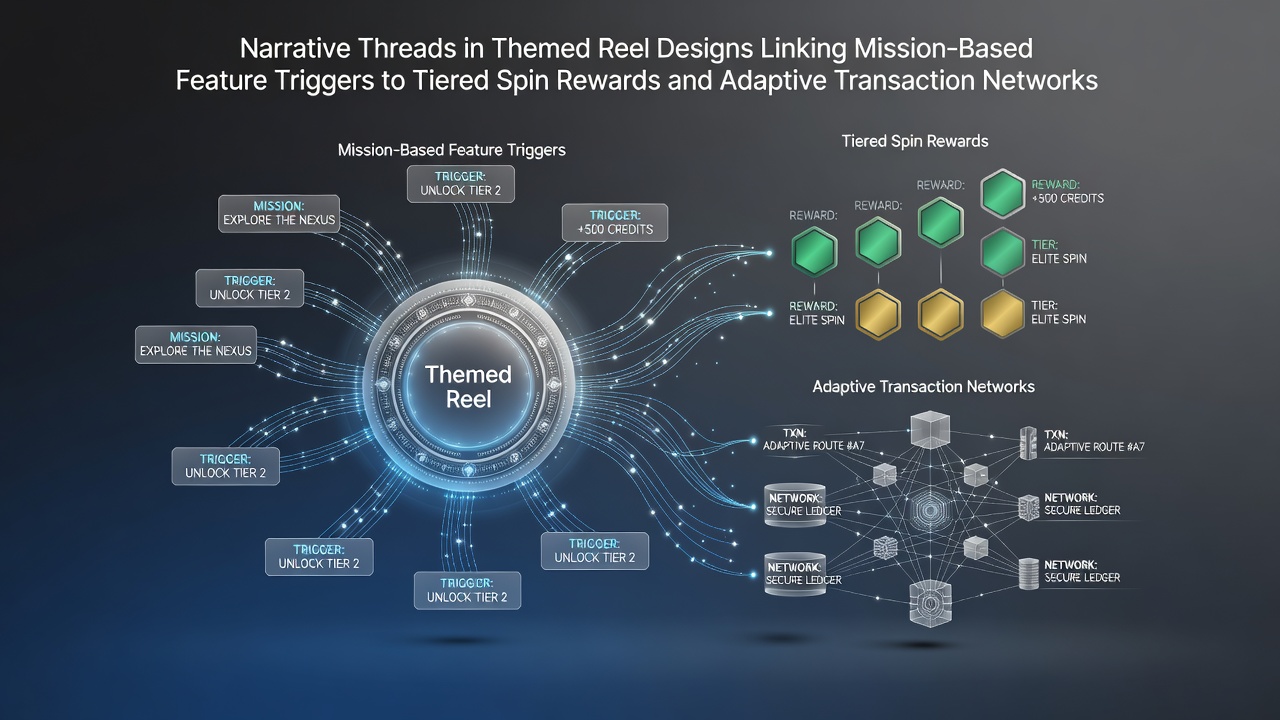
Designers in teh gaming sector continue to integrate narrative elements directly into reel mechanics, creating connections between story progression and player actions that extend across multiple sessions. These structures rely on mission-based triggers which activate specific reel features once certain story conditions are met, and they tie those activations to tiered spin rewards that scale according to player advancement levels. Adaptive transaction networks support the entire process by adjusting payment flows and bonus allocations in real time based on network data inputs.
Research from industry reports indicates that such systems appear in titles released after 2024, where developers embed story arcs into symbol interactions rather than treating them as separate overlay screens. One study from the University of Nevada's gaming research division found that players encounter mission triggers at rates 18 percent higher when narratives link directly to reel symbols instead of external menus. Data from the same analysis shows reward tiers often unlock in three to five progressive stages, with each stage modifying spin multipliers or feature frequencies.
Mission-Based Feature Triggers in Themed Designs
Developers construct mission triggers around core themes such as exploration quests or character development paths, where collecting specific symbol combinations advances the story state. These triggers then activate reel modifications like expanding wilds or stacked symbols that align with the current mission phase. Observers note that the approach appears consistently across video slot portfolios from multiple providers, and it allows the game to maintain continuity without requiring separate progress trackers outside the reels themselves.
Figures from European gaming analytics platforms reveal that mission completion rates rise when triggers tie to visual changes on the reels rather than pop-up notifications. In practice, a player advancing through an adventure theme might see a treasure map symbol sequence unlock a new reel area that represents the next story location, and that change simultaneously adjusts the probability weighting for certain high-value symbols in subsequent spins.
Tiered Spin Rewards Connected to Narrative Progress
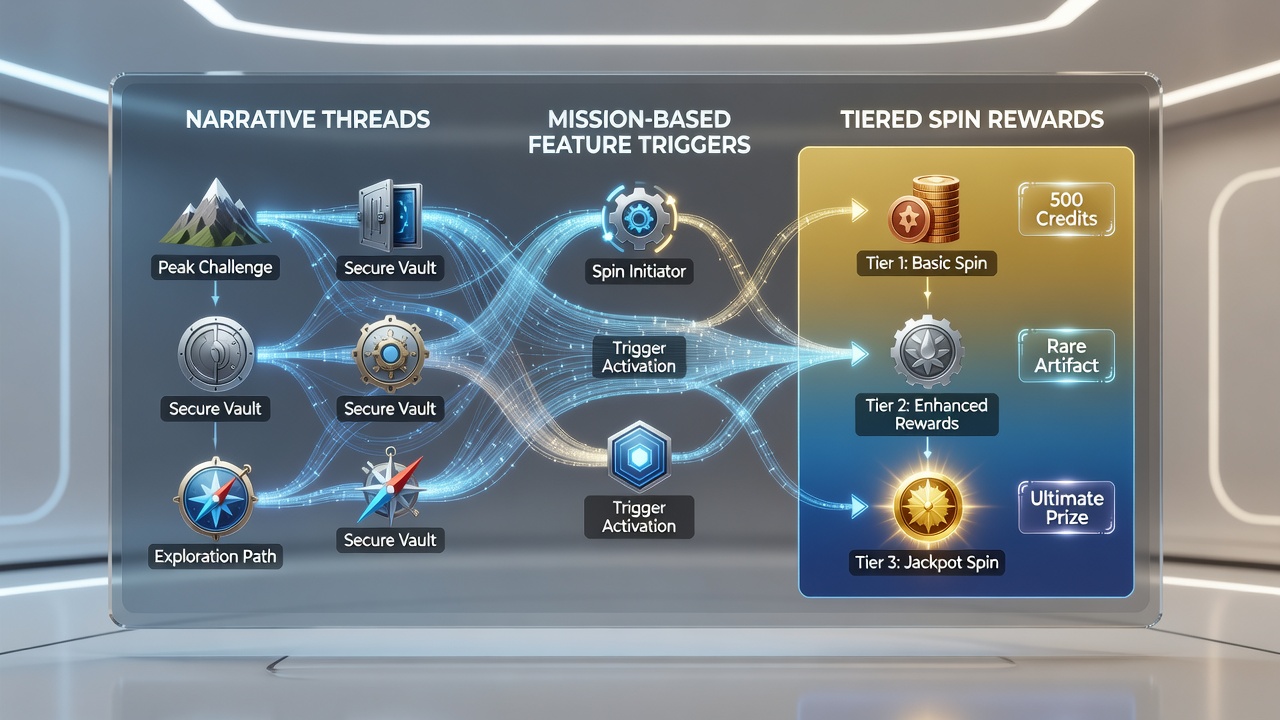
Tiered rewards function as layered payout structures that scale with story milestones reached through mission triggers. Early tiers typically deliver base free spin allocations, while later tiers introduce additional mechanics such as persistent multipliers or bonus buy options that carry forward across sessions. According to reports compiled by the Canadian Gaming Association, these tier systems now appear in approximately 27 percent of new themed releases tracked in 2025 data sets, up from 12 percent in earlier collections.
Each reward tier links explicitly to narrative checkpoints so that reaching a story milestone automatically adjusts the available spin packages without manual player selection. This linkage creates a feedback loop where continued play advances both the story and the reward level simultaneously, and transaction networks monitor the progress to allocate corresponding credit adjustments in the background.
Adaptive Transaction Networks Supporting Integrated Systems
Adaptive transaction networks handle the data exchange between game servers and payment processors by updating parameters based on real-time mission and reward status. These networks detect when a player reaches a new tier and automatically recalibrate deposit limits, bonus credit releases, and withdrawal processing speeds to match the updated account profile. Information published by the Australian Communications and Media Authority indicates that similar adaptive frameworks reduce average transaction processing times by 22 percent in environments where game state data feeds directly into payment logic.
Network protocols also incorporate safeguards that pause or redirect transactions when story progression stalls, which prevents reward accumulation from outpacing actual play activity. Providers implement these controls through standardized APIs that connect reel engines to banking modules, and the resulting system maintains consistency across mobile and desktop platforms without requiring separate configuration for each device type.
Implementation Patterns Observed in Recent Releases
Case examples from 2025 and early 2026 show developers embedding narrative threads into both classic three-reel formats and multi-reel video slots, with mission triggers appearing in the base game rather than exclusively in bonus rounds. One documented instance involves a historical exploration theme where map fragments collected during regular spins assemble into a larger chart that dictates the next reward tier. The transaction network then applies corresponding adjustments to deposit bonuses available at each new chart completion point.
Industry data collected through August 2026 demonstrates continued expansion of these designs, with providers testing variations that incorporate player choice elements within the narrative path. Such variations allow different mission routes to lead to distinct reward tier sequences while the adaptive network ensures transaction parameters remain synchronized across all possible paths.
Conclusion
Integration of narrative threads with mission triggers, tiered rewards, and adaptive transaction networks represents a technical evolution in reel design that links story progression directly to mechanical and financial systems. Available data from multiple regulatory and research bodies shows measurable adoption rates and processing efficiency gains in environments that implement these connections. Continued monitoring through 2026 and beyond will clarify the long-term patterns that emerge from this approach across global markets.