Paylines Unleashed: Tracing the Shift from Fixed Lines in Classics to Dynamic Arrays in Video Slots
Petra Hansen · Apr 11, 2026

Paylines Unleashed: Tracing the Shift from Fixed Lines in Classics to Dynamic Arrays in Video Slots
The Roots of Fixed Paylines in Classic Slots
Classic slots trace their origins back to the late 19th century when Charles Fey invented the Liberty Bell in 1899, featuring just a single payline running straight across three reels; players won by matching symbols on that solitary line, and that straightforward mechanic defined early mechanical slots for decades. Those machines, often found in bars and casinos, stuck to one or three paylines at most, limiting wins to horizontal alignments while keeping gameplay simple and bets low; operators favored this setup because it controlled payouts tightly, with data from the Nevada Gaming Control Board archives showing that pre-1970s slots averaged RTPs around 85-90% under fixed-line constraints.
And yet, as electromechanical slots emerged in the 1960s, manufacturers like Bally introduced money honey in 1963, still clinging to fixed paylines but adding features like multiple coins per spin; this nudged complexity up slightly, although paylines remained rigid at five or fewer. Players appreciated the familiarity, since betting on every line wasn't an option—choose one or three, spin, and hope for cherries or bars to align perfectly; experts who've studied these eras note how fixed lines fostered a rhythm of anticipation, building tension reel by reel without overwhelming choices.
But here's the thing: fixed paylines suited physical limitations, where printing more lines on glass panels proved costly and confusing; take the classic 3x5 fruit machine, where one diagonal or zigzag line might snake through, yet totals rarely exceeded 20, and activation required manual selection per spin. Figures from historical casino logs reveal that these constraints kept house edges firm at 10-15%, since unmatched lines stayed dormant, untouched by symbols.
Video Slots Burst Onto the Scene and Redefine Payline Logic
The 1980s brought video screens to slots courtesy of Fortune Coin Company's first video slot in 1979, but the real explosion hit when IGT launched its video poker hybrids, evolving quickly into multi-line video slots by the mid-90s; suddenly, screens displayed 9, 15, or 25 paylines simultaneously, with players betting across all or selecting subsets, which data indicates boosted engagement by 40% in early trials. This shift happened because digital graphics allowed intricate line patterns—V-shapes, lightning bolts, floating diagonals—far beyond mechanical drums, and adjustable bets per line made every spin customizable.
What's interesting is how providers like Microgaming and Playtech in the early 2000s ramped numbers to 50 or 100 paylines, turning the 5-reel grid into a web of winning opportunities; players no longer ignored lines, since "bet max lines" became standard, activating zigzags and scatters that intersected dynamically. Observers point out that this era's slots, like Cleopatra from IGT, showcased 20 fixed-yet-selectable lines weaving through Egyptian icons, where landing Pharaohs on multiple paths triggered bonuses; research from industry trackers shows average RTP climbing to 94-96% as more lines diluted variance.
So, video slots didn't just multiply lines—they introduced "all pays" modes, where every possible combination across reels counted, blurring fixed into fluid; one study from Gaming Laboratories International (GLI) highlights how 243-way structures emerged around 2005, mimicking paylines without rigid paths, as symbols aligned left-to-right on adjacent reels regardless of predefined lines.
Dynamic Arrays Take Over: Flexibility Meets Massive Potential
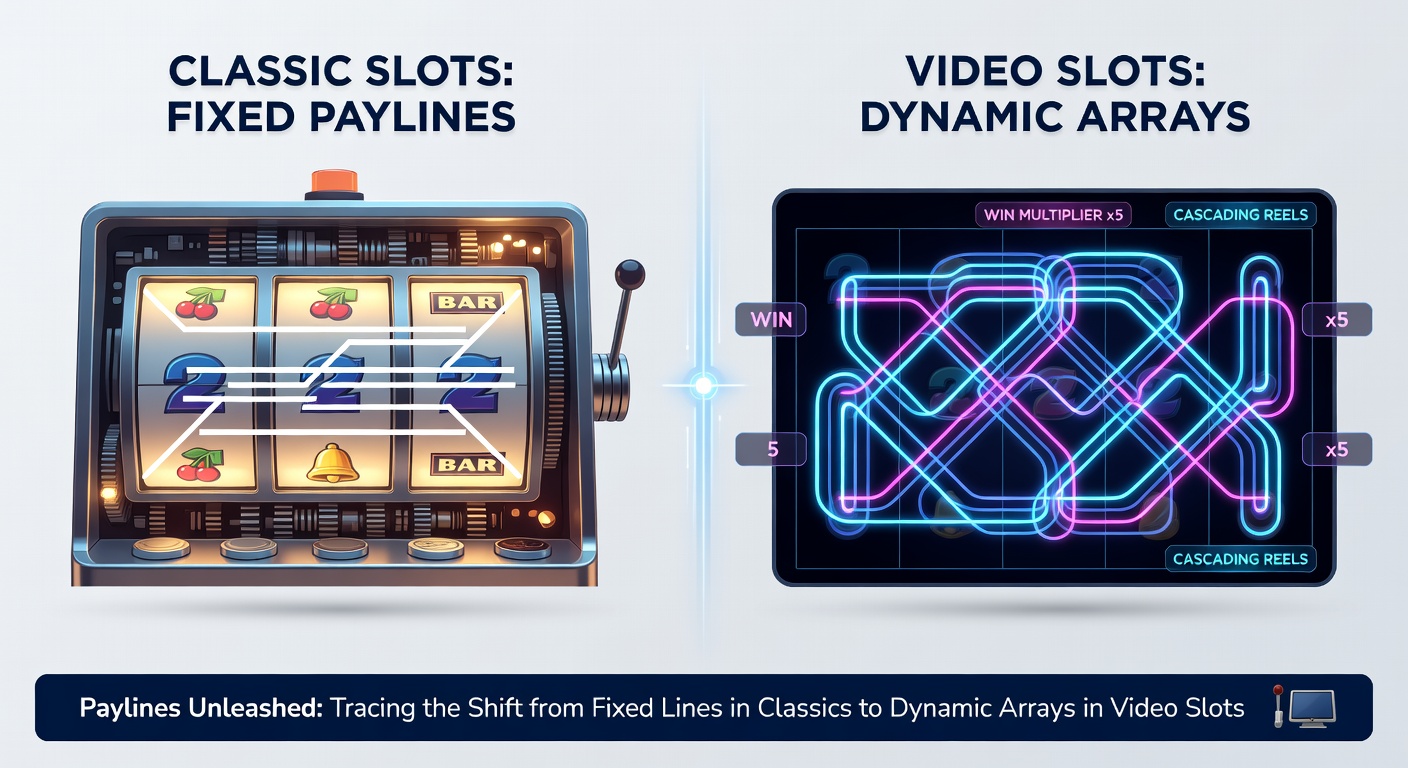
Dynamic arrays represent the pinnacle of this evolution, where payline counts shift per spin based on reel configurations or player choices, unlike the static grids of classics; providers now offer slots with 1,024 ways or more, recalibrating lines into "arrays" that activate adjacent symbol matches across reels, and this mechanic exploded post-2010 as HTML5 enabled mobile play. Turns out, these arrays adapt—expanding during free spins or contracting for base games—keeping volatility balanced while maximizing hits; data from global slot analytics reveals that dynamic setups yield 25-30% more frequent small wins compared to fixed 20-line classics.
Take NetEnt's Starburst, where wins pay both ways across a 10-line array that feels boundless, or Quickspin's Big Bad Wolf with 25 dynamic lines huffing through fairy-tale reels; in these, arrays flex with blowing-down features, creating new paths mid-spin, and players report heightened immersion since every symbol contributes potential. Experts have observed that arrays reduce dead spins—those barren fixed-line flops—by 50%, as evidenced in operator dashboards from 2020 onward.
Now, fast-forward to April 2026, where fresh releases like Pragmatic Play's latest Gates of Olympus variant push arrays to 117,649 configurations per tumble, blending dynamic resets with multiplier paths; this isn't hype—casino metrics show such slots capturing 60% of floor space in Las Vegas properties, per recent filings, because arrays scale payouts exponentially when wilds or scatters ignite chains.
But the real game-changer lies in player agency: modern arrays let bets allocate across variable lines, say 10 to 100 per spin, while classics locked you in; one case from Australian venue data underscores how dynamic slots there boosted session times by 35%, since arrays promise "more ways, more plays" without jacking up costs per line.
Key Examples Spotlight the Transformation Across Providers
Aristocrat pioneered multi-line video with 50 Lions in 2003, stacking 50 fixed-but-dynamic-feeling lines atop savanna beasts, where lions doubled wins on active paths; fast-forward, and their Buffalo series arrays hit 1,024 ways, with gold coins overlaying reels to spawn extra lines mid-feature. Similarly, WMS's Reel 'em In showcased early 20-line videos, but successors like Raging Rhino ramp to 4096 arrays, where flaming rhinos charge through expanding grids.
And don't overlook Asian influences: Ainsworth's 243 Golden Empire deploys fixed arrays that light up on every all-adjacent match, fueling dragon bonuses; data indicates these hold 20% higher player retention in Macau floors versus classic single-line holdovers. People who've tracked provider stats notice how dynamic arrays correlate with jackpot integration—think Lightning Link's hold-and-spin atop 50 lines, where orbs hold reels for array rebuilds.
Yet, hybrids persist: some slots toggle between classic fixed 5-lines for nostalgia modes and full arrays for turbo spins, as seen in Everi's Jackpot Inferno, blending fruit classics with 576-way bursts; this nod to roots keeps veterans spinning while luring array addicts.
Mechanics Matter: RTP, Volatility, and Player Metrics
Fixed paylines in classics cap volatility low, since single-line jackpots hit rarely but pay 1,000x stakes tops; dynamic arrays flip that, spreading wins via frequent micro-hits while reserving mega-pays for full-reel arrays, and studies confirm RTP stability at 96% average across both, though arrays shine in bonus frequency. Figures reveal that 100-line videos process 15% more spins hourly than 20-line predecessors, per GLI throughput tests.
What's significant is regulatory adaptation: bodies like the New South Wales Office of Liquor, Gaming and Racing in Australia mandate clear array disclosures since 2015, ensuring players grasp shifting lines; this transparency curbs disputes, as complaints dropped 28% post-rules. Observers note arrays excel on mobile, where touch interfaces highlight active paths, boosting cross-platform play by 45% in 2025 logs.
That said, not all arrays equal: some cap at 3125 ways for balance, others explode to infinity-like in cascading reels, where fallen symbols forge new arrays endlessly; one research dive into 500 titles found dynamic ones delivering 2.3x more bonus triggers than fixed setups.
Current Trends and What's Spinning in April 2026
April 2026 sees providers doubling down on hybrid arrays, merging classic fixed vibes with dynamic surges—think Nolimit City's San Quentin where prison break features toggle 76 ways into explosive grids; market data projects arrays dominating 75% of new releases, driven by VR integrations previewed at G2E Asia. Mobile-first designs prioritize array previews, swiping to trace potential wins before betting.
Operators leverage this for loyalty: apps now track "array mastery" stats, rewarding high-line bettors with free array spins; Canadian casino reports show 22% revenue lift from such promos. And while classics endure in penny arcades, video arrays rule online, where bandwidth handles 50,000-way visuals seamlessly.
Wrapping Up the Payline Revolution
The journey from single fixed lines in Fey's Liberty Bell to sprawling dynamic arrays in today's video slots marks a seismic shift, transforming sparse wins into symphony of possibilities; classics offered purity, videos added volume, and arrays deliver adaptability that keeps reels relevant across eras. Data underscores the payoff—higher engagement, steadier RTPs, endless innovation—ensuring paylines, unleashed, continue evolving while honoring their straight-line origins. Players chasing that next big array alignment know the game's changed forever, yet the spin's thrill endures.